


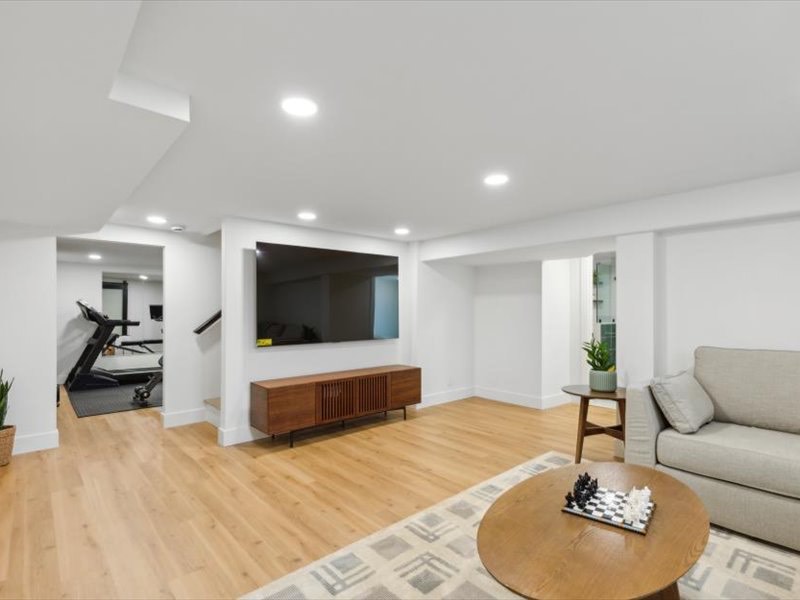
When you turn a basement into a TV room, kids’ hangout, or guest suite, the floor makes or breaks the space. Below grade, concrete stays chilly, sound echoes, and any little bit of moisture feels more serious. The goal is a surface that feels warm underfoot, keeps noise down, and still handles the realities of Utah’s dry winters and occasional basement humidity.
Below are some practical ways laminate and carpet can work together to create a comfortable, quiet lower level.
Why Basements Feel Colder and Louder
Basements sit against concrete, so they lose heat faster than the main floor. Even in a well-insulated home, that means:
- The floor surface runs several degrees cooler than the air.
- Footsteps, toys, and movie nights bounce sound around more easily.
- Any moisture issue, from a minor spill to a past leak, tends to show up at the floor first.
That’s why what’s under and on top of your flooring matters so much. A good underlayment under laminate or a quality carpet pad does as much for warmth and sound as the surface you see.
Laminate: Hard-Surface Comfort With the Right Underlayment
Laminate is a strong choice for basements because it floats over the slab, tolerates temperature swings, and gives you a wood-look floor without the worries of solid hardwood below grade. Modern options include textured planks, realistic grain, and tough AC4 and AC5 wear layers that stand up to family traffic.
If you’re comparing styles, it helps to see how different plank widths and colors look in a real room. Our catalog lets you explore laminate flooring with wood textures and virtual previews so you can picture the basement finished instead of guessing from a tiny sample.
For warmth and quiet, underlayment is just as important as the plank itself. Look for:
- A vapor barrier layer to separate the floor from the concrete.
- Cushion that adds a little “give” and softens the feel.
- Sound-dampening properties to keep footsteps from echoing upstairs.
When we come out to measure, we’ll talk through which underlayments make the most sense for your particular basement—finished vs. unfinished walls, history of moisture, and how you plan to use the space.
Where Carpet Shines in Basement Living Spaces
Hard surface is great for durability, but there’s a reason many homeowners still want carpet under their feet when they step down to watch a movie. Carpet cushions falls, absorbs sound, and instantly makes a lower level feel more like a living room than a converted storage area.
If you’re leaning toward carpet over all or part of the basement, the pad is where a lot of the warmth and sound control comes from. Because we offer padding at our cost, you can step up to thicker, higher-quality cushion without blowing the budget. That makes a real difference in how quiet and cozy a basement feels.
You can sort through styles, fibers, and price points in our basement‑friendly carpet selection, from soft family-room textures to more durable options for stairs and play areas.
A popular approach is to combine both materials: laminate in the main traffic path from the stairs and exterior door, and carpet in the TV zone or kids’ corner. That way, you get easy cleanup near entrances and maximum warmth where people actually sit on the floor.
Designing a Basement That Feels Like Part of the Home
The most successful basement projects don’t feel like an afterthought. They echo the style of the main level but are tailored to what basements actually endure: occasional dampness, lots of kids’ activity, and big temperature swings between seasons.
Many homeowners look through photos of our completed Wasatch Front projects to get ideas for color transitions, stair treatments, and how laminate meets carpet at room openings. Seeing real installations can make it easier to decide where to change materials and how dark or light to go.
If you’re curious about who you’ll be working with, our story explains how Corey and the team handle everything from small basement refreshes to full lower-level build‑outs. You can learn more about our locally owned flooring shop and approach before you ever set foot in the showroom or invite us over.
Next Steps for a Quieter, Warmer Basement
Every basement is a little different—some in older Salt Lake homes need moisture checks, while newer suburban builds may simply need better sound control and a warmer feel. We’re happy to look at your space, talk through laminate and carpet combinations, and recommend underlayments that fit how your family actually lives.
If you’re ready to explore options, you can book a free measurement and in‑home estimate, and we’ll bring samples right to your basement so you can feel and hear the difference for yourself.


