


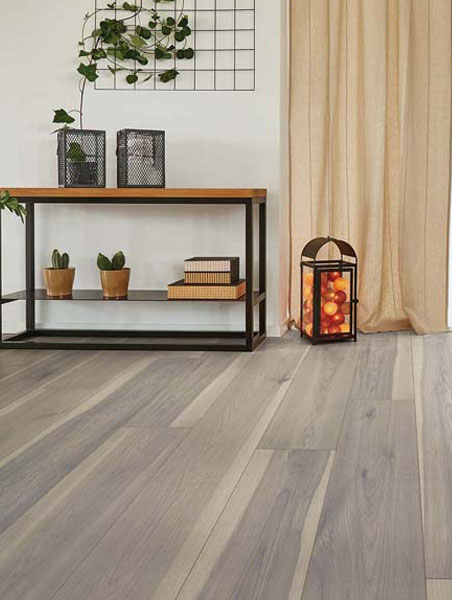
You pull up old carpet and suddenly see every color of wood in the house: golden oak baseboards, darker doors, maybe a cherry-stained banister. You love the idea of durable laminate, but the thought of trying to “match” all that wood can feel overwhelming. If you live in an older Sandy or Salt Lake area home, this is a common design puzzle — and it’s absolutely solvable.
Below are practical, real-world guidelines we use every week to help homeowners tie new laminate into existing trim and doors so everything feels intentional, not pieced together.
Start With Undertones, Not Exact Matches
The biggest mistake people make is trying to match a laminate plank exactly to their wood trim. You almost never hit it perfectly, and when you’re close-but-not-quite, it actually highlights the difference.
Instead, focus on undertone:
- Warm woods (honey oak, maple, many alder doors) lean orange, yellow, or red.
- Cool woods (some walnut stains, espresso finishes) lean gray or taupe.
- Neutral woods sit in between, with more muted brown.
Lay a few laminate samples right against your baseboard and doors. Ignore how light or dark they are for a moment and just ask, “Do the undertones feel like they belong in the same family?” Many of the wood-look laminate options from Mannington and Revwood make it easier to stay in the right tone family while still choosing a style you love.
Once undertones line up, you have room to play with contrast.
Choose Your Strategy: Blend, Contrast, or “Bridge”
After you understand the undertones, decide how you want the room to feel. There are three main approaches, and all can work in a Wasatch Front home.
1. Blend the floor to the trim
Here the floor is close in color to the baseboards and doors, so everything reads as one continuous frame. This can be calming, especially in smaller rooms.
- Works well when your existing wood is a classic medium tone and in good shape.
- Best if you’re not planning to repaint or replace trim anytime soon.
2. Contrast the floor on purpose
Instead of almost-matching, you go lighter or darker enough that it looks intentional. Think light, natural oak laminate with rich espresso doors, or deeper brown planks with white painted casing.
- Great for modern updates in older Salt Lake City bungalows.
- Helps older trim feel “designed in” rather than dated.
3. Bridge multiple wood tones
Many homes around Draper and Sandy have one color for doors, another for stair railings, and something different again on built-ins. In that case, choose a laminate that sits between those colors or has varied graining that picks up both light and dark.
When we bring samples to your home, we often use that “bridge” approach to calm down a mix of wood tones, then recommend updating just a few high-impact pieces of trim or casing over time instead of tackling everything at once.
If part of your home will stay soft underfoot, you can still keep the palette cohesive by choosing bedroom carpet from our large carpet selection with upgraded pad at cost in colors that echo the tones of your laminate.
Pay Attention to Sheen, Grain, and Scale
Even when colors work, sheen and grain pattern can throw things off.
- If your doors are very glossy, a super-matte laminate may feel disconnected. Aim for a similar level of shine or at least avoid extremes.
- Busy grain on both trim and floor can look chaotic. If your doors have strong cathedral grain (common with oak), a calmer laminate pattern will balance it out.
- Plank width matters too. In many Cottonwood Heights and foothill homes, wider planks feel more in scale with taller baseboards and larger rooms, while narrow planks can fight against chunky trim.
Some luxury vinyl plank lines we carry also come in wide formats and soft-matte finishes if you want a waterproof option that still coordinates with woodwork in entries, mudrooms, or basements.
If you’d like to see how these choices look in real homes, our gallery of completed flooring projects around the Wasatch Front is a good place to start visualizing combinations.
Use Transitions and Paint to Pull It Together
The final trick is remembering you don’t have to solve everything with the floor alone. Transitions and paint are powerful tools.
- A coordinating T-mold or reducer strip at doorways can separate two slightly different wood tones so they don’t clash.
- Painting existing baseboards and door casings white (or a soft off-white) instantly frees you to choose almost any laminate tone you like, because now you’re only coordinating doors and floor.
- In hallways, small runners or area rugs can soften a strong contrast between darker doors and lighter planks without hiding your new floor.
If you’re thinking about one main hard-surface floor and softer spaces elsewhere, you can see how we’ve balanced that mix in recent hardwood, laminate, and carpet installations described in our company story and project highlights.
When you’re ready, we can come to your home, look at your existing trim and doors together, and narrow things down to a few great laminate options that truly fit. If you’d like that kind of one-on-one help, you can book a free measurement and in-home estimate and we’ll bring the samples to you.


