


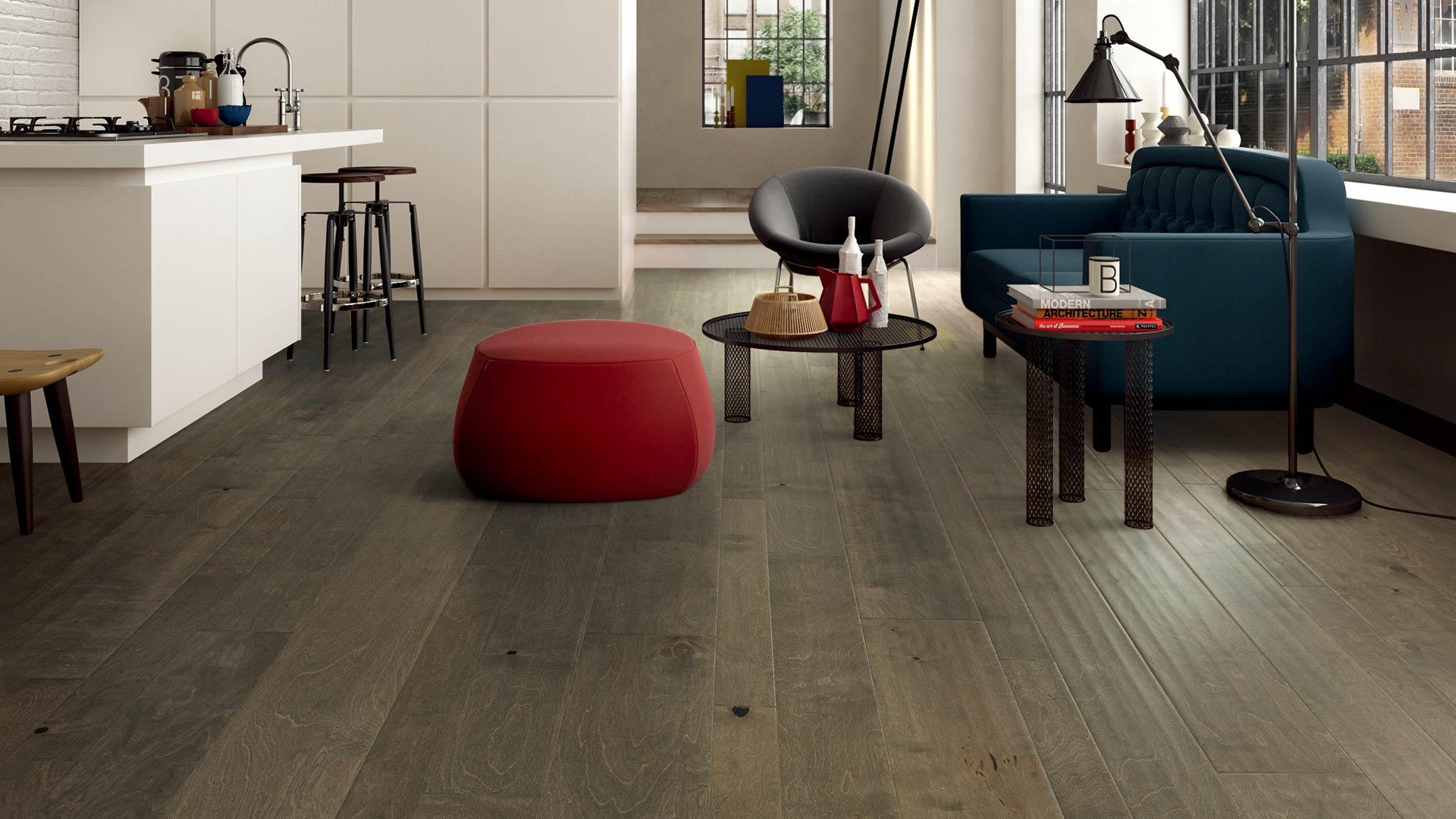
If you’ve ever woken up on a January morning, walked across your hardwood, and heard more squeaks than a ski lift, you already know dry air is tough on wood. Along the Wasatch Front, winter humidity can drop under 25% inside, and that has a huge impact on how your floors look and feel over time. When you’re choosing between engineered and solid hardwood, that dry climate is just as important as color or plank width.
Why Dry Air Is So Hard on Hardwood
Wood is hygroscopic, which means it constantly trades moisture with the air around it. In our climate, furnaces run for months, pulling moisture out of the air and out of your floors. As boards dry out, they shrink across their width and can start to:
- Gap at the seams, especially on wider planks
- Cup or crown if the subfloor or crawlspace stays more humid than the room
- Crack at the ends or around knots when conditions swing too fast
These issues are much more common with traditional solid boards, which are milled from a single piece of wood. Engineered planks use a layered construction, so they move less when the air goes from summer thunderstorms to ultra‑dry winter days.
If you want to see how many species, widths, and constructions you can choose from, it helps to browse the full hardwood product catalog and notice which lines are offered in both solid and engineered formats.
Engineered Hardwood: Built for Movement
Engineered hardwood is still real wood on top. The difference is underneath: the core is made from multiple layers of plywood or hardwood laid in alternating directions. That cross‑grain structure resists expansion and contraction, which is exactly what you want in a dry, high‑elevation climate.
In practical terms, that means:
- Smaller seasonal gaps. You may still see hairline seams in February, but they’re usually much less dramatic than with solid wide‑plank floors.
- More flexibility on plank width. If you love the look of broad planks in a Park City‑style great room, engineered construction makes that design much more stable.
- Better performance over basements or concrete. Where moisture can rise from below, a properly installed engineered floor handles the difference between subfloor and room humidity better than solid boards.
Brands like Hallmark and D&M offer a range of engineered hardwood lines that handle Wasatch humidity swings, so you can focus on the color and texture you love without ignoring the climate reality.
When Solid Hardwood Still Makes Sense
Solid hardwood still has real advantages, especially in older homes with existing wood. Many Salt Lake‑area bungalows and mid‑century houses already have oak under the carpet, and tying new rooms into that original material can be easier with solid planks you can sand multiple times.
Situations where solid may be worth considering:
- You’re matching existing solid floors and want everything sanded and finished together.
- You prefer the idea of future refinishing every decade or two to change color or erase wear.
- Humidity can be moderated with whole‑home humidifiers and good maintenance habits.
Because Underwood also does hardwood repair, sanding, and refinishing, we often combine a restoration project with new wide‑plank engineered in adjacent spaces so the whole house looks cohesive but still performs well in dry air.
Blending Hardwood with Other Materials in Busy Homes
Many families in Sandy and Draper want the warmth of wood in main living areas but need extra moisture resistance in entryways, mudrooms, or lower levels that see snow, salt, and wet gear. A smart approach is to pair engineered or solid hardwood upstairs with other materials in the high‑risk zones.
For example, you might run oak or hickory through the great room, then use waterproof luxury vinyl planks in the basement or near exterior doors where slush piles up. Bedrooms can stay cozy and quiet with soft carpet styles from the 9,000‑plus option catalog, especially when you can upgrade the pad at our cost.
If you’d like a second opinion grounded in local experience, you can also skim through recent customer feedback about Corey and the install crew to see how other homeowners have mixed materials in real projects.
Putting It All Together for Your Home
The bottom line: engineered hardwood is usually the safer default in our dry climate, especially for wide planks, concrete slabs, and rooms that see big temperature swings. Solid hardwood still shines when you’re matching existing floors or planning multiple sand‑and‑refinish cycles over decades. The right choice depends on your house, your lifestyle, and how much seasonal movement you’re willing to live with.
If you’d like help weighing those trade‑offs, we’re happy to come out, measure, and talk through options in your actual space. When you’re ready, you can schedule a no‑pressure in‑home estimate and we’ll bring hardwood samples to your door.


