


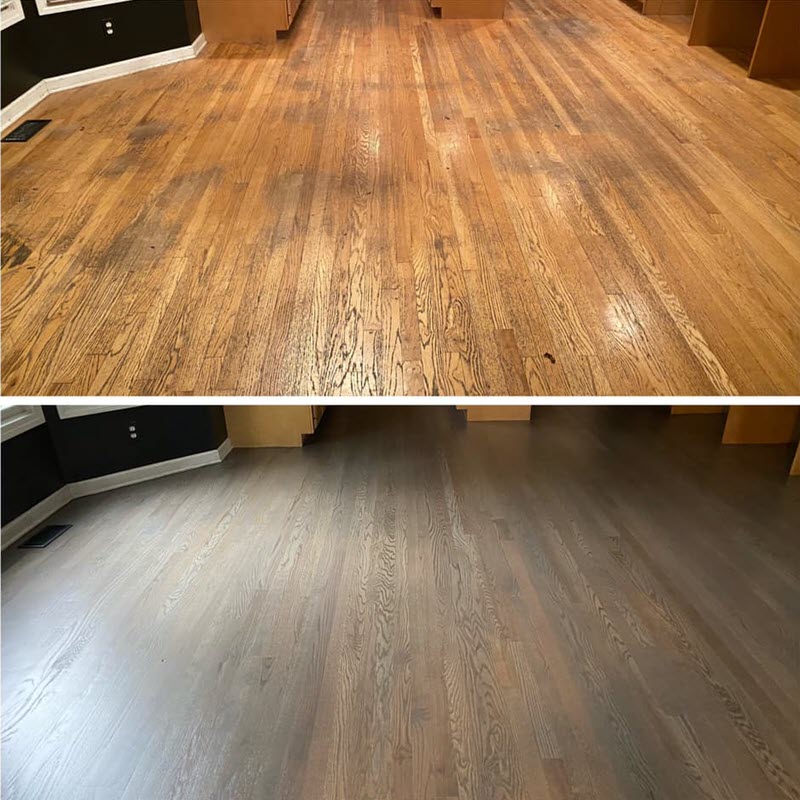
If you live up near the canyons, there’s a good chance your home has real wood underfoot—sometimes hidden under old carpet, sometimes already showing its age. A proper sand-and-refinish can make those floors look brand new, but it’s also one of the easiest projects to unintentionally damage if you rush, cut corners, or use the wrong products for our dry, high-altitude climate.
Below are the refinishing mistakes we see most often in Cottonwood Heights–area homes, and how to avoid them.
Mistake 1: Skipping Moisture and Climate Checks
Wood is constantly moving with humidity and temperature, and our Wasatch Front winters are especially hard on it. Refinishing when your indoor air is extremely dry or when you’ve had a recent leak can lead to cupping, gapping, and a finish that fails early.
What to do instead
- Use a simple hygrometer to check indoor humidity before refinishing. Ideally, you want it in a moderate range—not the 20% desert air you get with the furnace blasting nonstop.
- Run a humidifier for a few weeks in winter if your readings are very low.
- If you’ve had a fridge leak or ice melt soak the entry, give the subfloor time to dry fully before sanding.
If you’re also planning to add new wood in a hallway or addition, it helps to compare those existing boards to engineered and solid planks in our hardwood catalog so the new material expands and contracts in a similar way.
Mistake 2: Over-Sanding or Using the Wrong Grit
DIY rental sanders can remove decades of finish in a hurry, but they can also chew right through your wear layer or leave waves and dips that never quite disappear. Once you’ve sanded too deep, there’s no putting the wood back.
Signs you’re heading for trouble
- Starting with an extremely coarse grit when the floor only has light wear.
- Holding the sander in one spot to chase a dark stain.
- Sanding across the grain in tight rooms or closets.
A pro will step through multiple grits, vacuum thoroughly between passes, and know when a board is too thin to sand again and should instead be replaced. You can see the kind of results that approach produces in photos of recent hardwood projects across the Wasatch Front.
Mistake 3: Choosing the Wrong Finish for Your Lifestyle
Finish choice is where a lot of regret shows up. A high-gloss coat might look amazing on day one, but in homes with ski boots, dogs, and kids, every scratch and speck of dust is going to stand out.
Common pitfalls include:
- High-gloss in heavy-traffic entries and kitchens.
- Soft finishes in homes with large dogs.
- Very dark stain colors in dusty, gear-heavy households.
For busy households that still want the warmth of wood, we often talk through alternative surfaces for the hardest-working zones. Kitchens, mudrooms, and basements may be better served by waterproof luxury vinyl planks that mimic wood, while the main living areas keep their refinished hardwood.
Mistake 4: Ignoring Transitions and Adjacent Flooring
Refinishing isn’t just about the boards in one room. The way your newly refreshed wood meets carpet, tile-look vinyl, or stairs can make the whole project feel either seamless or pieced together.
Two issues come up a lot:
- Refinishing only one room and leaving a sharp color change at the doorway.
- Forgetting to plan for height differences where wood meets softer surfaces.
Sometimes the smartest approach is to refinish your existing wood and at the same time refresh adjoining spaces. Bedrooms might get new carpet, and that’s a great time to take advantage of the extensive carpet selection with padding offered at cost so the transitions feel intentional, not like a patchwork of old and new.
Mistake 5: Treating Refinishing Like a Quick Weekend Project
A full sand-and-refinish is messy, noisy, and disruptive for a few days. Trying to rush it—moving furniture back too soon, skipping cure time, or living on the floor before the finish hardens—can leave permanent marks and imprints.
Instead of forcing it into a tight window, it helps to think of refinishing as one part of a longer-term plan for your floors. Some homeowners decide to restore the main level now and replace a dated lower level with durable wood-look laminate in a future phase, spreading out both the cost and the disruption.
If you’d like a second set of eyes on your existing wood and a practical plan that fits your schedule, our team is happy to come out, measure, and talk through options. You can book a free estimate for your home and we’ll help you avoid the common pitfalls before the first sander ever touches your floor.


